False Fisheries, 1932–46
A harmless label on a ledger. A false cover. A hiding place for names someone needed erased.
A novel by Diop
A hidden register.
A column of names removed by blade.
A truth powerful enough to make governments, museums, and families afraid.
Saint-Louis, 1960. As independence arrives, a colonial clerk finds a record that should have been destroyed.
Decades later, archivist Awa Sarr opens the file again.
Some records were never meant to be found.
Some names were never meant to survive.
Instant PDF delivery. No subscription. No platform lock-in.
The file begins with five clues.
A harmless label on a ledger. A false cover. A hiding place for names someone needed erased.
A stamped mark that keeps appearing where official memory breaks.
A storage code for records that were not destroyed, only made difficult to find.
A gathering of names stitched into the wrong book so the right people might one day ask the right question.
Not missing pages. Not damaged paper. Names removed with a blade.
The question is not only what was hidden. It is who built the system that kept it hidden.
In the final days before independence, a young colonial clerk receives a register that was never meant to survive. Inside are the names of the displaced, the punished, the erased: villages seized, witnesses silenced, lives reduced to numbers.
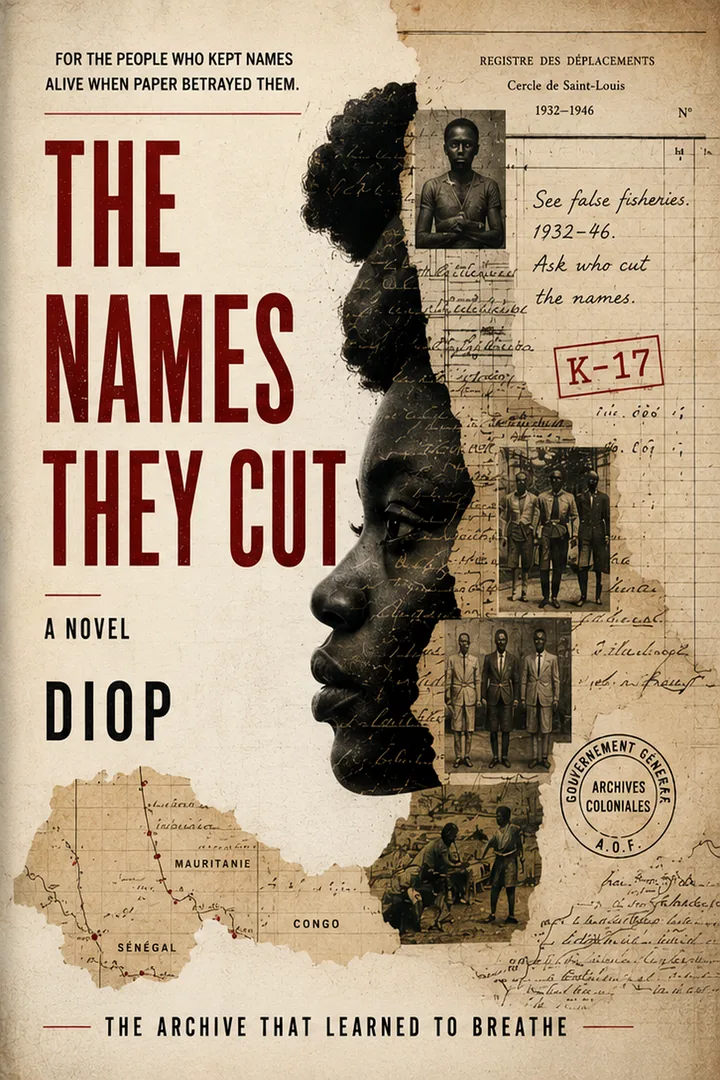
When he hides the index inside a false fisheries ledger, he leaves behind one instruction: See false fisheries, 1932–46. Ask who cut the names.
Decades later in Dakar, archivist Awa Sarr inherits her father’s unfinished search for those names. What begins as a damaged shipment of colonial records becomes a trail through family secrets, mining concessions, state pressure, and rooms where the past is still being negotiated by people who profit from silence.
From Saint-Louis to Dakar, from Congo to Paris, The Names They Cut is a literary historical mystery about memory, power, and the truth that refuses to stay buried.
Start where the file opens.
Inside a colonial office, rain is entering the ledgers and independence is entering the building before the flags have changed.
A register arrives in a sack meant for spoiled flour.
By morning, the register will be gone.
But one index will survive.
No signup required to read the sample.
Lines from the archive
Reader positioning
If you are drawn to novels where family memory collides with official records, where the archive becomes a crime scene, and where the past is not past because someone is still being paid to keep it quiet, this book is for you.
For readers of Homegoing, The Nightingale, and The Little Paris Bookshop, and for anyone who has ever wondered what disappears when institutions decide a name no longer matters.
Editions
Read today. Keep forever.
Includes the direct PDF edition of The Names They Cut, delivered instantly after purchase.
Best for readers who want to begin now.
Buy Digital Edition · $5.99Instant PDF delivery. No subscription. No platform lock-in.
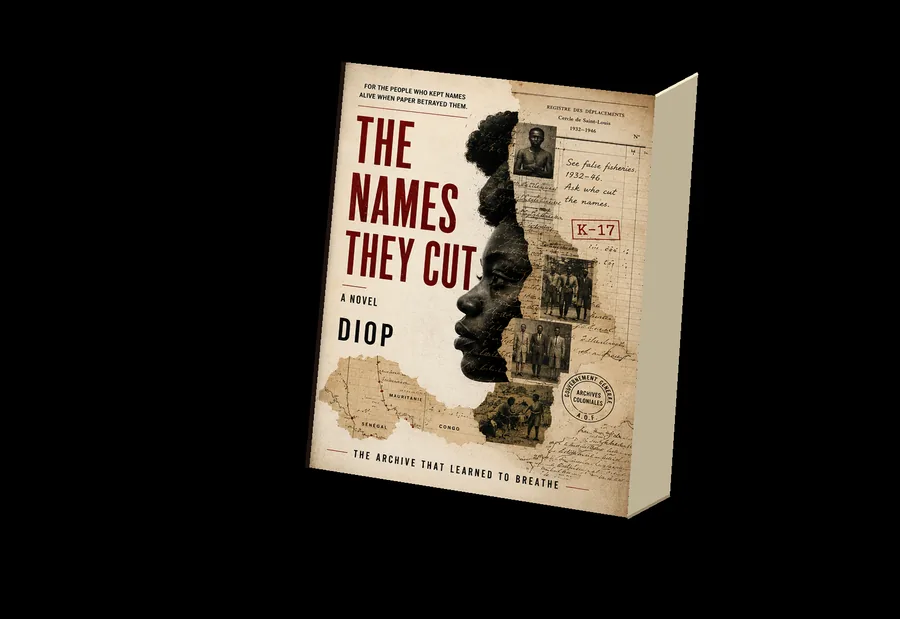
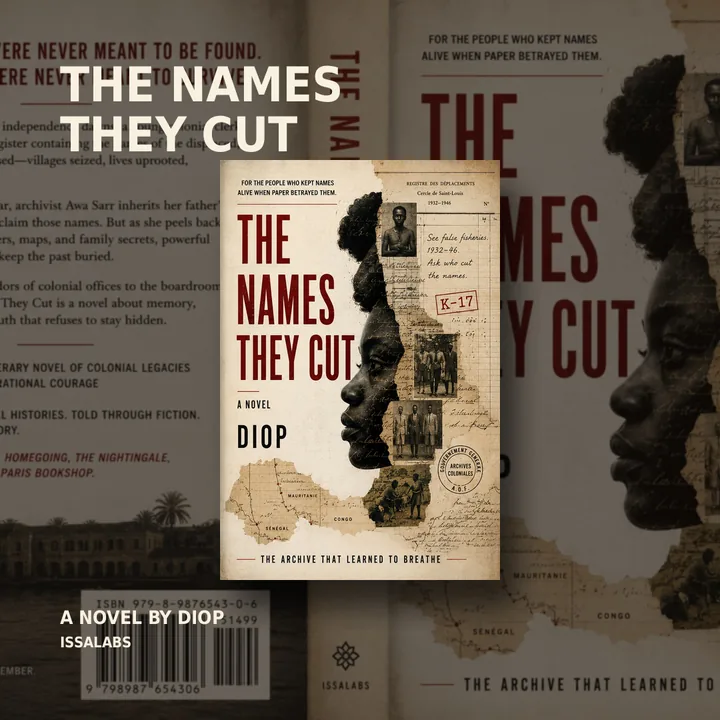
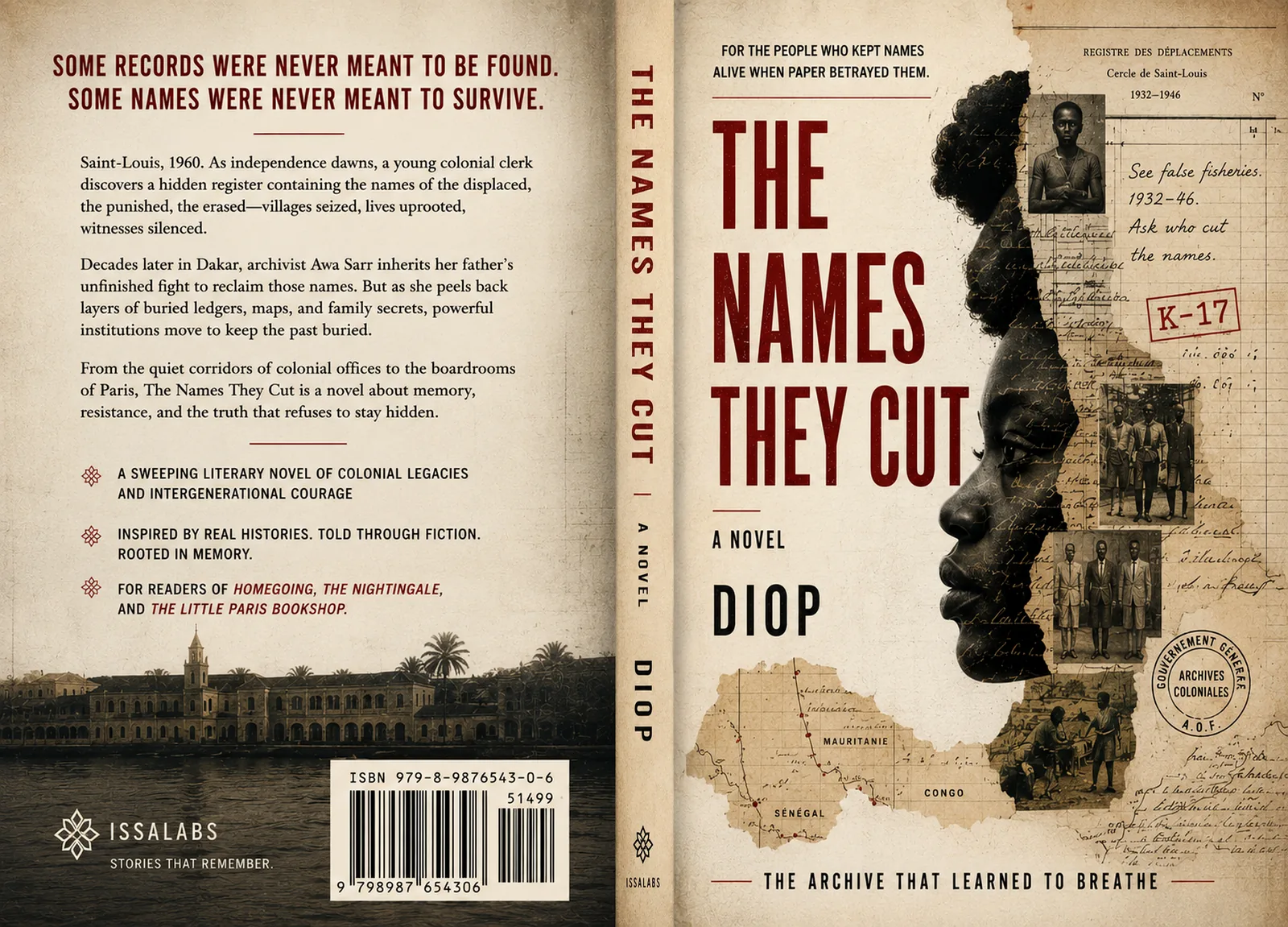
A print edition designed as an archival object: parchment texture, oxblood typography, ledger fragments, map traces, and the ISSALABS imprint.
Available through Amazon print-on-demand.
Coming soon on AmazonA case-laminate edition for readers who want the book as an object, not only a file.
Available through Amazon once approved.
Coming soon on AmazonPrint edition
The print edition was designed to feel like recovered evidence: worn paper, colonial ledger fragments, red archive marks, map traces across Senegal and Congo, and a cover that looks less like decoration than a warning.
This is not a clean object. It is meant to feel handled, hidden, misfiled, and found again.
About the book
The Names They Cut is a literary historical mystery about the violence hidden inside paperwork.
It follows Awa Sarr, a Dakar archivist pulled into a chain of colonial records, missing witnesses, family secrets, mining documents, and official silences. As the evidence spreads from Senegal to Congo to Paris, the question becomes larger than one register.
About Diop
Diop writes fiction about archives, power, memory, and the lives hidden inside official records.
The Names They Cut is the first novel in a growing literary archive cycle published by ISSALABS.
About ISSALABS
ISSALABS publishes high-concept literary and digital objects built around memory, systems, and the future of storytelling.
The Names They Cut is part of its archival fiction line: stories designed to feel discovered, not merely released.
FAQ
You receive the direct PDF edition of The Names They Cut, delivered after purchase.
Yes, but the current direct edition is PDF-first. If an EPUB edition is added, it will be included or made available as an update.
It is a novel. The characters and plot are fictional, but the book draws its atmosphere from real historical forces: colonial archives, erased identities, institutional power, disputed memory, and the long afterlife of paperwork.
No. The story is built as a mystery. You enter through a hidden register, a cut index, and a woman trying to recover names others tried to remove.
The paperback edition is prepared for Amazon print-on-demand at $14.99.
A hardcover edition is planned at $26.99 once the case-laminate print files are approved.
Diop is the author of The Names They Cut and the Archive Cycle.
ISSALABS publishes the book as part of its literary imprint.
Yes. The Archive Cycle continues with The Silent Index.
A register survived.
An index was hidden.
A name was cut from the page.
Now the file is in your hands.
Start today. The first file is already open.